2025 How to Choose the Right Office Signage for Effective Branding?
In today's competitive business landscape, effective branding is paramount, and one critical aspect of this is "Office Signage." Research indicates that nearly 75% of customers have admitted to entering a store or office based solely on its signs, highlighting their significant role in attracting and engaging clients. Additionally, a study by the Sign Research Foundation reveals that about 60% of consumers believe that signs reflect the quality of a business. Therefore, selecting the right office signage is not merely a matter of aesthetics; it is an investment in conveying your brand message and values.
Effective office signage encompasses a variety of factors, including design, readability, and placement, all of which contribute to enhancing brand identity. According to the International Sign Association, businesses that incorporate effective signage can experience a 20% increase in sales, underscoring the importance of strategic signage choices. As companies look towards 2025, understanding how to align their office signage with their branding objectives will be crucial. This guide explores essential considerations for choosing the right office signage, ensuring that it serves as a powerful tool for brand recognition and customer engagement in an ever-evolving marketplace.

Understanding the Importance of Office Signage in Branding Strategies
Office signage plays a pivotal role in branding strategies, as it serves as a visual communicator of a company's identity and values. According to recent studies, companies that utilize effective signage see a boost in brand recognition by up to 50%. This highlights the necessity of selecting the right office signage that not only captures attention but also conveys the essence of the brand. In an environment where first impressions matter, clear and compelling signage can engage visitors and reinforce branding messages, fostering a sense of trust and professionalism.
When choosing office signage, consider the cognitive impact of design elements such as color, font, and material. Research indicates that consistent use of visual elements increases brand retention by over 70%. For instance, using a cohesive color palette that aligns with your brand can enhance visibility and memorability. Additionally, incorporating wayfinding signage can significantly improve navigation within the workspace, contributing to a positive visitor experience.
Tips: Ensure that your signage reflects your brand's mission and values, creating an authentic representation. Utilize high-quality materials to enhance durability and aesthetics. Additionally, consider the strategic placement of signage in high-traffic areas to maximize visibility and impact.
Key Elements to Consider When Designing Office Signage
When designing office signage, several key elements play a crucial role in creating effective branding. Firstly, clarity is paramount. According to a study by the Sign Research Foundation, nearly 70% of consumers believe that signage reflects the quality of a business. Clear, concise messaging not only aids navigation within the office but also fosters a professional image that aligns with the company's branding. Utilizing easily readable fonts and a cohesive color palette that matches the overall office aesthetic can significantly enhance visibility and comprehension.
Additionally, the material and durability of signage should not be overlooked. In a survey conducted by the International Sign Association, companies reported that high-quality signage can increase customer recognition by up to 50%. Choosing materials that withstand environmental factors while maintaining visual appeal is essential. For instance, outdoor signs should be weather-resistant, while indoor signs can utilize different textures and finishes to evoke the desired ambiance. Incorporating elements such as digital displays or eco-friendly materials can further elevate a brand's commitment to innovation and sustainability, resonating with modern consumers' values.
2025 How to Choose the Right Office Signage for Effective Branding?
| Element |
Description |
Importance for Branding |
Design Considerations |
| Clarity |
Signage must convey information clearly and quickly. |
Ensures that messages are understood without confusion. |
Use simple fonts and concise messaging. |
| Consistency |
All signage should reflect the brand's identity. |
Reinforces brand recognition among clients and employees. |
Adopt uniform color schemes and logos across all signs. |
| Readability |
Font type, size, and color affect how easily signs can be read. |
Critical for ensuring all visitors can easily understand the messages. |
Choose high-contrast colors and legible font sizes. |
| Material Quality |
Durable materials ensure signage withstands the test of time. |
Reflects the brand’s commitment to quality. |
Select materials that align with the office environment. |
| Location |
Proper placement is crucial for visibility. |
Helps in guiding visitors effectively throughout the space. |
Analyze foot traffic to determine optimal signage locations. |
Material Choices: Balancing Durability and Aesthetic Appeal
When selecting office signage, one of the primary considerations should be the choice of materials. The right materials not only enhance aesthetic appeal but also ensure durability in various office environments. For instance, materials like acrylic and metal can create a modern sleek look while showing resilience against wear and tear. Conversely, wood offers a warm and inviting presence, making it perfect for companies aiming for a more organic feel. Ultimately, the material should reflect the brand identity and resonate with the target audience.
Tips: Consider how the signage will be used and placed. For high-traffic areas, materials like aluminum or high-density polyethylene may be ideal due to their resistance to damage. On the other hand, for indoor settings with less exposure to elements, lighter materials like foam board can be used creatively to portray the brand's narrative.
The aesthetic quality of the signage is just as crucial as its durability. Choosing colors and finishes that harmonize with the office environment can elevate the overall branding experience. Matte finishes can impart a sophisticated, understated elegance, while glossy finishes can attract attention and create a vibrant impression. Balancing these aspects will not only enhance brand recognition but also contribute positively to the workplace ambiance.
Tips: Before finalizing material choices, evaluate how they align with current office decor and branding strategies. Conducting a simple survey or gathering feedback from employees can provide insights into the visual impact of potential signage materials.
Color Psychology and Fonts: Their Impact on Brand Recognition
The choice of colors and fonts in office signage plays a critical role in brand recognition and perception. According to a study by the Institute for Color Research, people make a subconscious judgment about a person, environment, or product within 90 seconds, and 62-90% of that assessment is based on color alone. This underscores the importance of carefully selecting colors that align with your brand identity. For instance, blue often conveys trust and professionalism, ideal for corporate environments, while warm colors like red and orange can evoke energy and creativity, beneficial for more innovative companies.
Fonts are equally crucial in communicating your brand's personality. A report from the Software Usability Research Laboratory noted that 95% of first impressions are influenced by typography, which can also affect readability and engagement levels. Different fonts have distinct associations; for example, serif fonts are often perceived as traditional and reliable, while sans-serif fonts tend to project a modern and clean image. By strategically combining color psychology with the right typography, companies can enhance their visibility and strengthen their brand message, ensuring it resonates with their target audience effectively.
Cost-Effectiveness: ROI on Quality Signage Investments
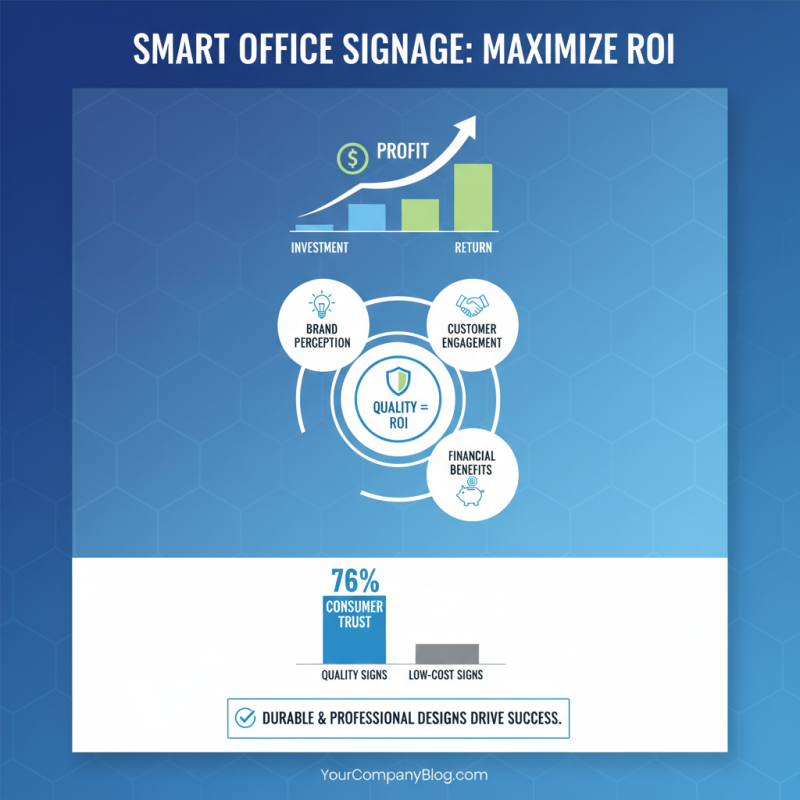
When it comes to selecting signage for your office, cost-effectiveness is paramount, particularly in maximizing return on investment (ROI). Research indicates that high-quality signage can yield significant financial benefits, contributing to branding efforts and overall customer engagement. A study conducted by the Sign Research Foundation found that 76% of consumers said the quality of a business’s signage reflects the quality of its products or services. This underlines the importance of investing in durable, professionally designed signs that not only catch the eye but also communicate brand values effectively.
Moreover, a well-executed signage strategy can lead to increased foot traffic and sales. According to a report from the FedEx Office, 68% of the respondents indicated that they have purchased a product or service because of its signage. This correlation between effective signage and consumer behavior suggests that investing in quality signs is not merely an expense but a strategic investment. The typical ROI on signage can reach up to 150%, particularly when businesses utilize signs to reinforce their brand messaging and improve visibility in competitive markets. Thus, the initial investment in quality signage can be recouped not just in terms of physical sales, but also through enhanced brand recognition and loyalty over time.