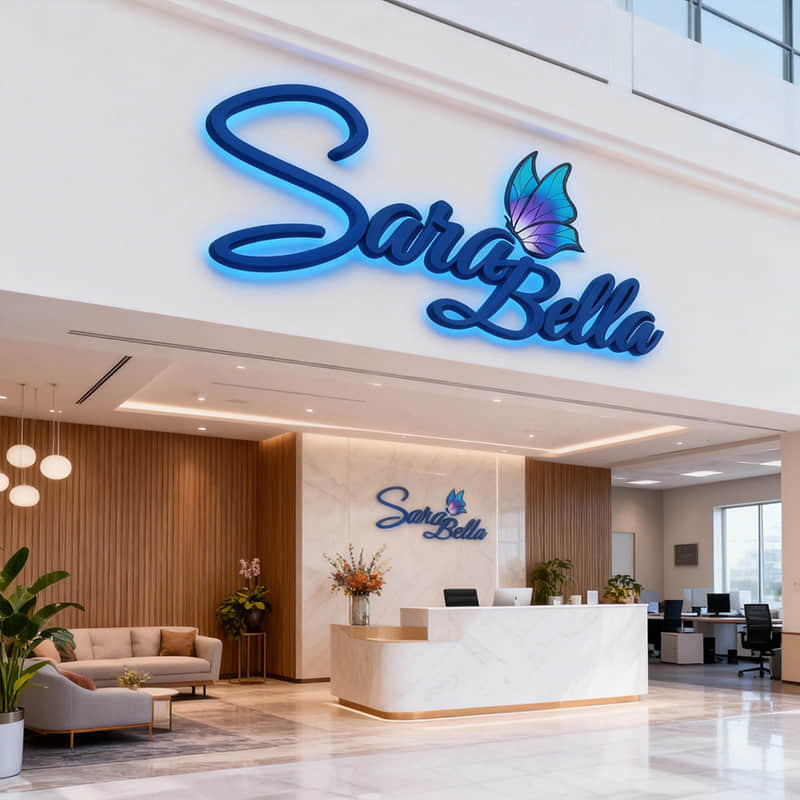





Smart RGB Color Changing Backlit Letters with Remote Control
Let’s look at the seams. Old-school factories weld the return of the backlit letter using a handheld soldering iron and tin solder. This leaves a messy, silver bead inside the corner that eventually oxidizes and cracks. We have upgraded to automated Laser Welding. This machine uses a focused beam of light to melt the stainless steel itself, fusing the metals together without adding any filler material. This means the seams of the backlit letter are fused at a molecular level, creating a bond that is cleaner, stronger, and virtually invisible from the outside.
We also don't just "hope" our paint lasts; we torture it. Before we finalize a paint formula, we put a sample backlit letter into a Salt Spray Chamber (ASTM B117 standard). We blast it with a saline fog for 500 continuous hours to simulate years of exposure in a coastal city like Miami or Sydney. Only if the paint shows zero bubbling or peeling do we approve it for production. This testing protocol ensures that the finish of the backlit letter stays intact, protecting the metal underneath from the elements.
Finally, a huge headache for installers is the "Wire Exit." Most designers put the power wire dead center in the middle of the letter stroke. But that is often exactly where the mounting stud goes! If the wire and the stud fight for the same space, the sign won't sit flat. We intentionally offset the wire exit hole on the back of the backlit letter by about 20mm away from the mounting points. This small engineering tweak allows the installer to drill clean, separate holes for the wire and the stud, ensuring the wire connector sits flush against the backlit letter acrylic for a perfect, wobble-free install.
Case Picture